
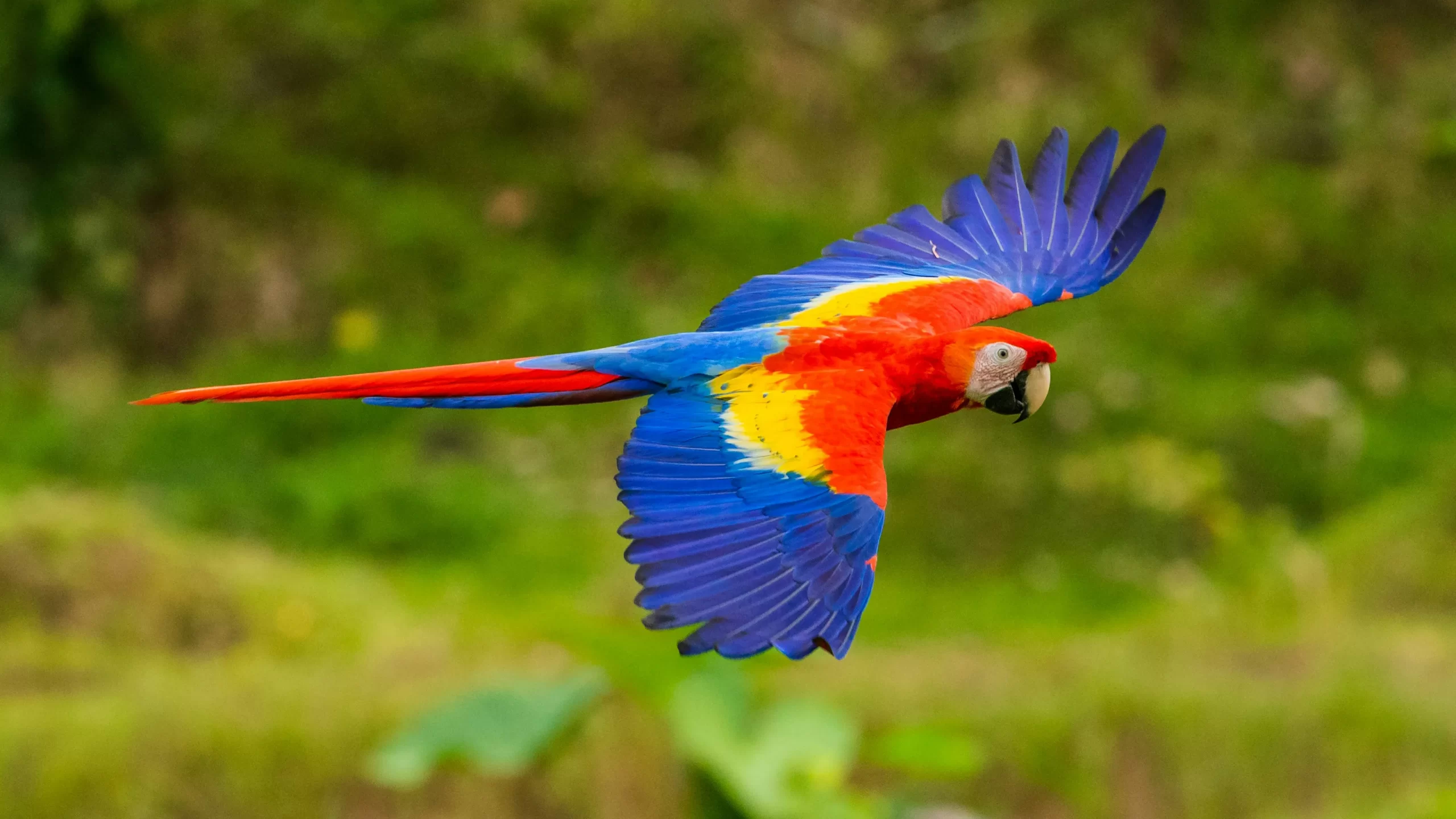
With lush jungles, sun-kissed beaches, and some of the highest biodiversity in the world, Costa Rica remains a perennial favorite for both active and idle vacations alike. This guide explores where to go in Costa Rica, highlighting the best destinations for beaches, jungles, volcanoes, and more.
Jump to:
- Where to Go in Costa Rica for Beaches
- Where to Go in Costa Rica for Jungles
- Where to Go in Costa Rica for Volcanoes
- Where to Go in Costa Rica for Surfing
- Where to Go in Costa Rica for Yoga
- Where to Go in Costa Rica for Wildlife Viewing
- Where to Go in Costa Rica for All-Inclusive and Luxury Resorts
- Where to Go in Costa Rica for Hiking
- Where to Go in Costa Rica for Snorkeling
Where to Go in Costa Rica for Beaches
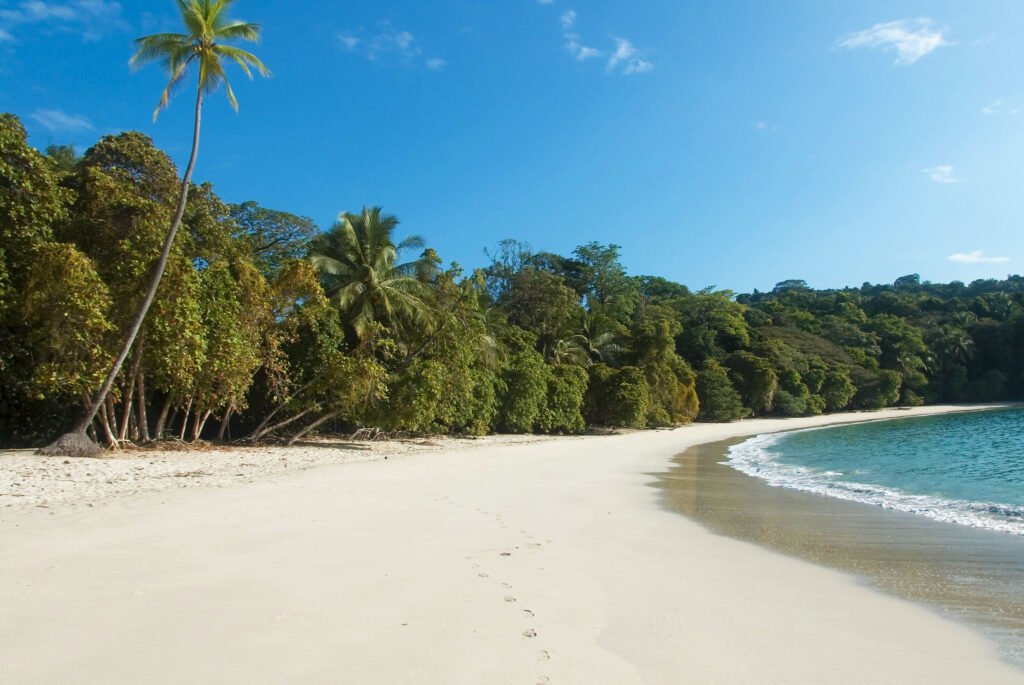
With 800 miles of coastline along both the Pacific and Caribbean, there’s no shortage of beach destinations in Costa Rica. You truly can’t go wrong, wherever you choose.
However, to help narrow down your options, we’ve summarized some of the most popular towns and regions below.
Tamarindo: the original beach town
Ever since Tamarindo was featured in the movie “Endless Summer II” in the mid-1990s, the former small fishing village has transformed into Costa Rica’s most popular beach destination.
Some may find it a bit too developed nowadays, but with that development comes numerous amenities.
You’ll find trendy restaurants and hotels lining Tamarindo’s walkable downtown, as well as long sandy beaches and plenty of surf rentals and lessons.
Manuel Antonio/Quepos/Jacó: wildlife, jungles, and nightlife
Combined, this string of towns forms the most popular tourist hub along Costa Rica’s central Pacific coast.
With their proximity to Manuel Antonio National Park (the country’s most visited natural landmark), the beaches here also have jungles and wildlife easily accessible.
As a generalization for each town:
- Manuel Antonio is a loose collection of resorts and amenities, nearest the entrance to the namesake national park.
- Quepos is the nearest actual town, housing both local residents and backpackers. You’ll find cheaper accommodation here.
- Jacó, further up the coast, is a tourist hotspot with a party vibe. Nice hotels and hip restaurants blend with a vibrant nightlife that might be a positive for some, and a drawback for others (we note, it can get a bit seedy off the main drag).
Travel Tip: Jacó is also a popular surf destination. Backyard Hotel, just down the road in Playa Hermosa, hosts a weekly surf competition that is a fun watch. Although the competition is a well-known event, it still retains a casual, "locals only" vibe that makes you feel like you stumbled on a hidden secret.
Nicoya Peninsula: surfing, yoga, and wellness
Just south of Tamarindo begins the Nicoya Peninsula, a top destination for the wellness set.
Along the peninsula, the popular beach towns of Nosara and Santa Teresa cater to the surfer/yogi crowd, with organic cafes and yoga studios complimenting their long sandy beaches.
Travel Tip: The namesake town of Nosara is actually a bit inland from the coast, and caters more to locals. Vacationers usually head to the beachfront neighborhood of Guiones instead, just down the road. In Guiones, you'll find boutique hotels, hip restaurants, and plenty of yoga studios and surf rentals.
Puerto Viejo: calmer waters with a Caribbean vibe
Costa Rica’s Caribbean coast is much less accessible than the Pacific side, but with that comes an entirely different culture.
Here, vibrant Afro-Caribbean traditions lend an authentically Caribbean air, with the music and cuisine reflecting what you’d experience in Belize or Jamaica.
And while there are still a few top surf breaks, overall the water is calmer, with gentle, lapping waves befitting a Caribbean vacation.
Where to Go in Costa Rica for Jungles
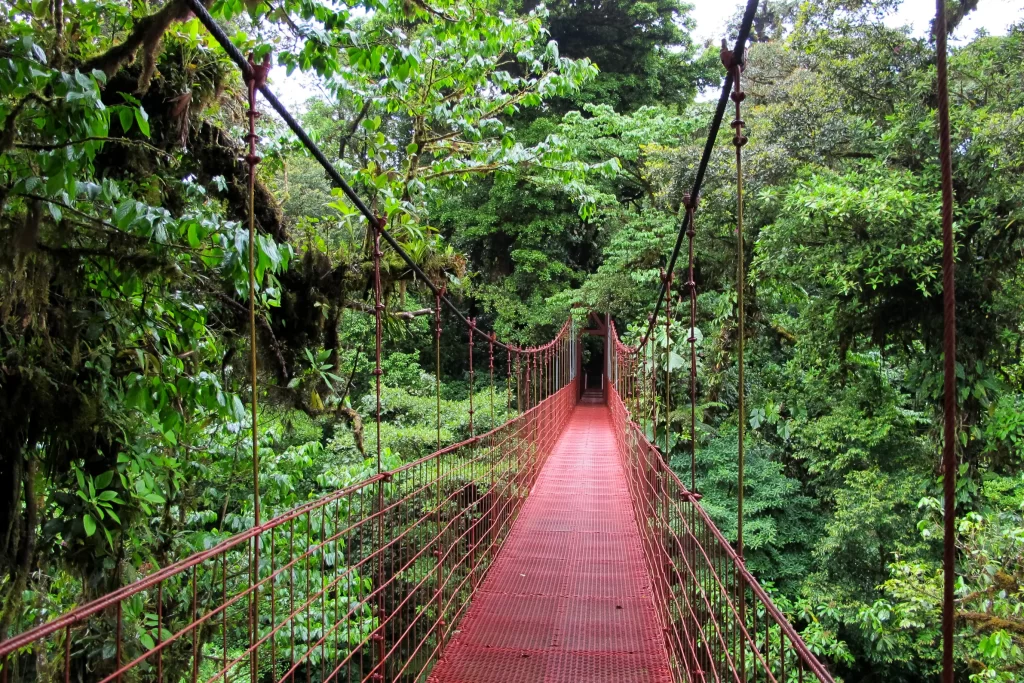
Dense, tropical rainforests blanket much of the country, and are home to some of the world’s highest biodiversity. Depending on how adventurous you’re feeling, some of Costa Rica’s top jungle locales include Arenal, Monteverde, and the Osa Peninsula.
Arenal
Also the country’s most popular volcanic destination (below), Arenal is easily accessible, making it a comfortable spot for your first visit to Costa Rica.
Hiking offers an immersive experience beneath the rainforest canopy. Check out the trails within Arenal Volcano National Park, or perhaps hike to La Fortuna waterfall (don’t forget a bathing suit!)
Monteverde Cloud Forest
Monteverde is a popular spot for Costa Rica first-timers. More unique than simply jungle, the moody, misty cloud forest is a rare ecosystem in its own right.
You can either explore Monteverde on your own, or book a guided tour (including night walks!). Just be sure to book your tickets in advance.
Osa Peninsula
Despite being just 700 square miles, the remote Osa Peninsula is home to 2.5% of the world’s biodiversity. It is not easy to get to, but your reward is one of the most ecologically rich regions on earth.
The best place to experience it all is Corcovado National Park. Among the park’s lush jungle interior, you’ll spot monkeys, macaws, sloths, tree frogs, and more… including, perhaps, the elusive jaguar.
Where to Go in Costa Rica for Volcanoes
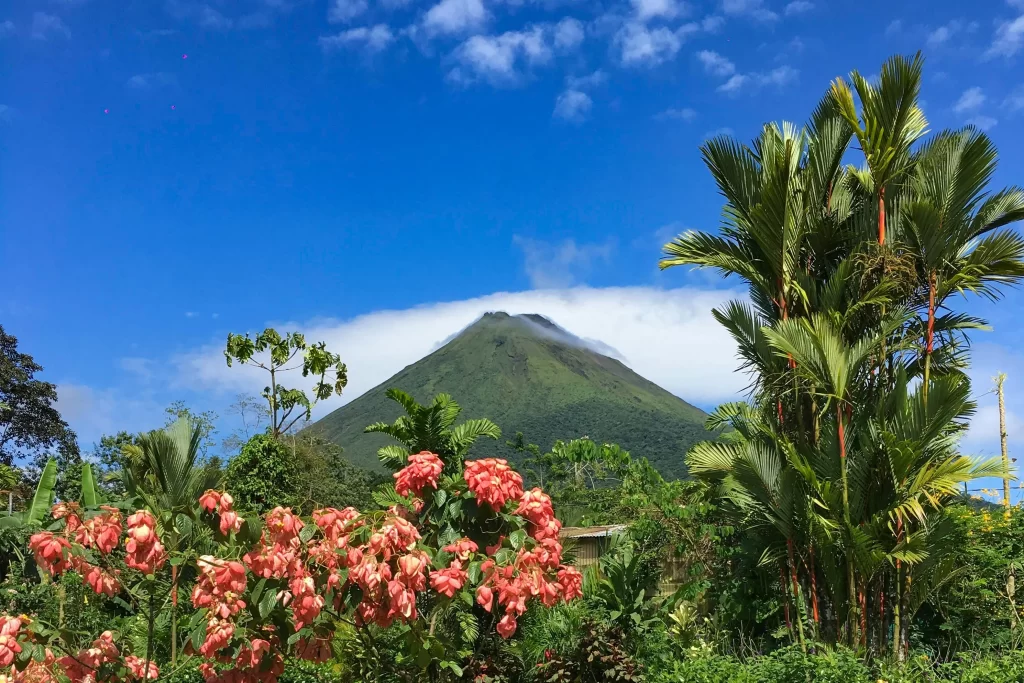
Costa Rica has over 200 active and extinct volcanic formations, but the most famous, by far, is Arenal. Most visitors make a point to visit Arenal on their first trip to Costa Rica.
And even though the volcano has been dormant since 2010, there is still plenty to see and do in the surrounding area.
The nearest town to base out of is La Fortuna. From here, you can either go hiking in Arenal Volcano National Park, explore the shores of Lake Arenal, or soak in one of the region’s famous hot springs, touted for their healing properties.
Of the local hot springs resorts, Tabacon is the most luxurious property, while we’ve also had a lovely experience at the quieter, family-owned Eco Termales.
Travel Tip: if you visit any hot springs, we strongly recommend booking your reservation in advance. Viator spa experiences also offer numerous guided volcano or waterfall hikes, before ending the day with a satisfying hot spring soak.
Where to Go in Costa Rica for Surfing
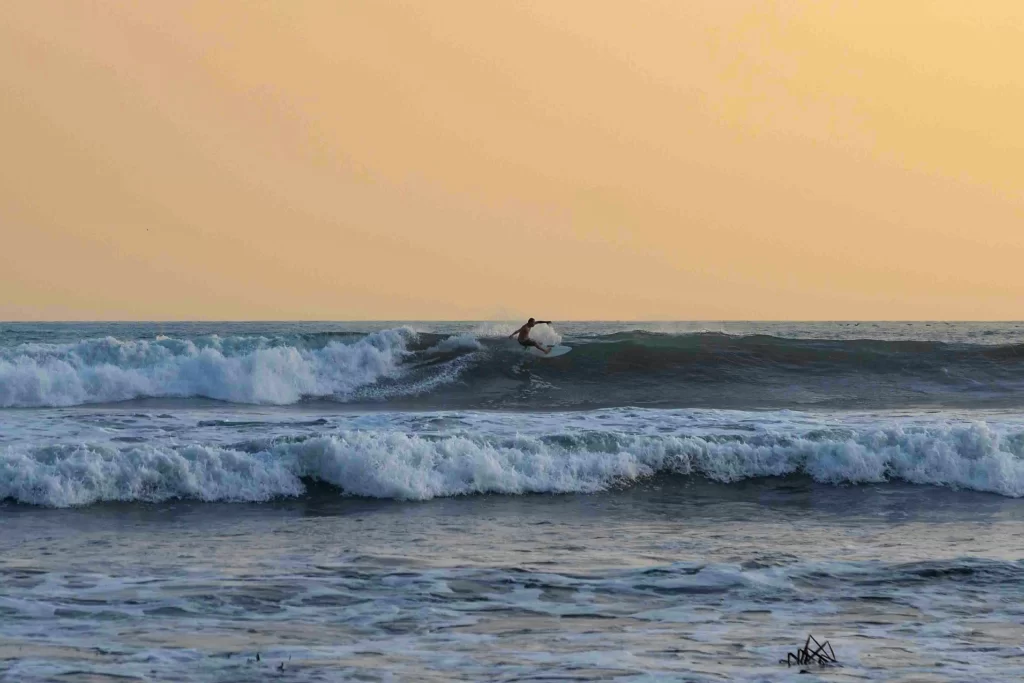
The majority of Costa Rica’s surf scene is along the Pacific coast, with numerous spots for strong, consistent swells throughout the year.
For beginner surfers, we recommend heading to either Tamarindo, Nosara, Santa Teresa, or Jacó. These are the country’s most popular surf destinations, known for the combination of gentle breaks and numerous amenities (including board rentals and lessons).
Intermediate to advanced surfers will still find more challenging waves at the locations above, during the Pacific coast’s rainy season (July to November). Nosara’s Guiones break can get especially heavy during these months.
Additionally, more advanced surfers can find quality waves at Playa Avellanas (near Tamarindo) and Playa Hermosa (just south of Jacó).
Where to Go in Costa Rica for Yoga
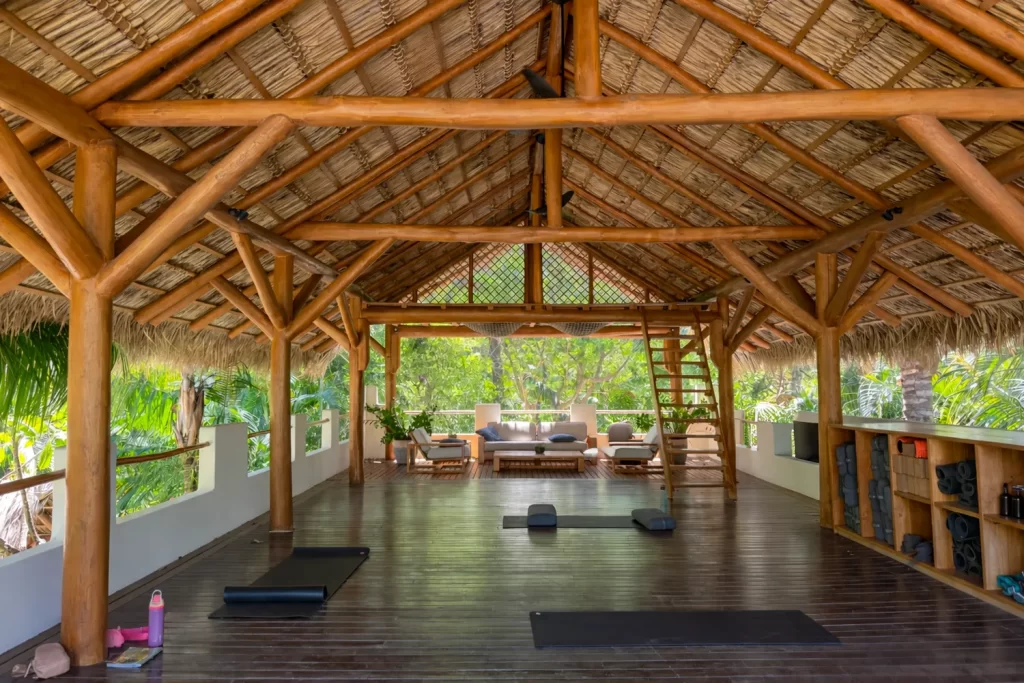
Over the past few decades, all of Costa Rica has been framed as a destination for yogis and wellness enthusiasts, and you’ll find studios and retreats wherever you go.
But if you’re looking for a fully immersive yoga experience, the best destination is Nosara. This sleepy beach town on the Nicoya Peninsula has morphed into the country’s biggest yoga hub, with numerous hotels and retreats dedicated to the practice.
The most famous is The Bodhi Tree, a first-rate resort with upwards of a dozen daily classes on site. The Harmony Hotel is equally popular, with multiple classes offered in their dreamy open-air yoga shalas.
You can learn more at our guide to the best yoga in Nosara.
Where to Go in Costa Rica for Wildlife Viewing
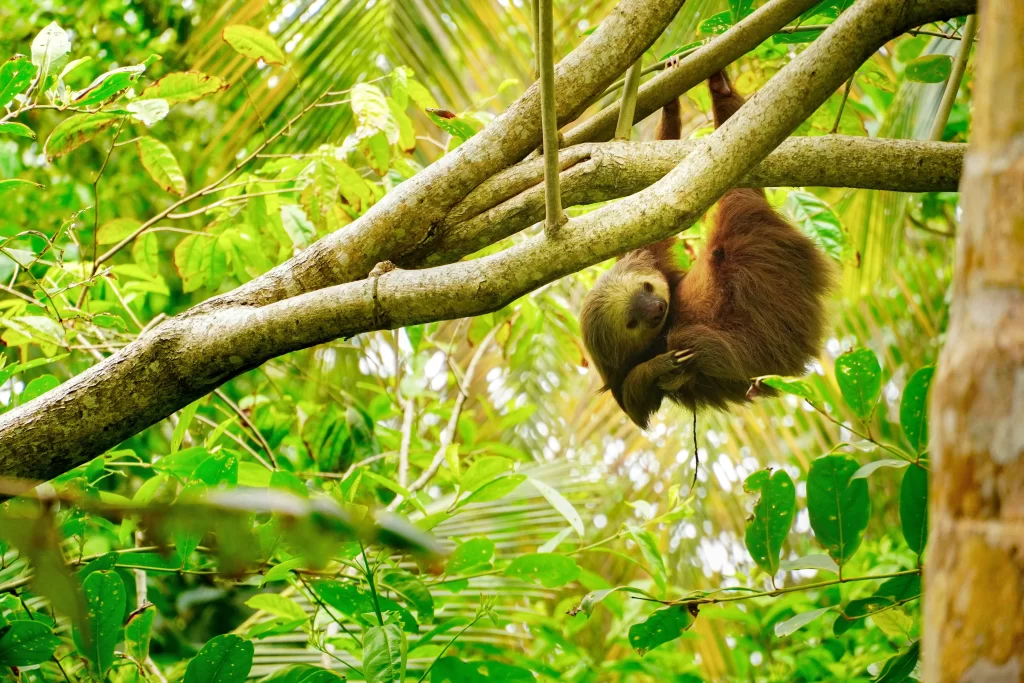
When deciding where to go in Costa Rica for wildlife viewing, the answer is two-fold.
The Osa Peninsula is one of the most biodiverse regions on the planet, but it’s also challenging to get to. Conversely, if you want to see many of Costa Rica’s iconic animals up close without the travel headache, Manuel Antonio National Park makes a first-rate substitute.
Osa Peninsula
It’s not an easy trek to the remote Osa Peninsula. You can either take a puddle-jumper flight to Puerto Jiménez Airport (PJM), or rent a car for the long drive (7 hours from San Jose).
However, once you’re there, you’ll be enveloped in one of the richest ecosystems on earth.
Prioritize visiting Corcovado National Park, which is home to 140 different species of mammals, nearly 370 types of birds, and 120 reptiles. Meanwhile, Drake Bay provides excellent viewing for marine life.
Manuel Antonio National Park
Located approximately an hour drive south of Jacó, Manuel Antonio is one of Costa Rica’s most biodiverse reserves relative to its small size. The national park is home to nearly 110 mammals and 350 birds, all living within a 4,900-acre footprint.
Within Manuel Antonio, you have a high likelihood of seeing sloths, monkeys, and tree frogs, along with birds like scarlet macaws and toucans.
You can either explore the park on your own, or join a guided tour for a more in-depth experience.
Where to Go in Costa Rica for All-Inclusive and Luxury Resorts
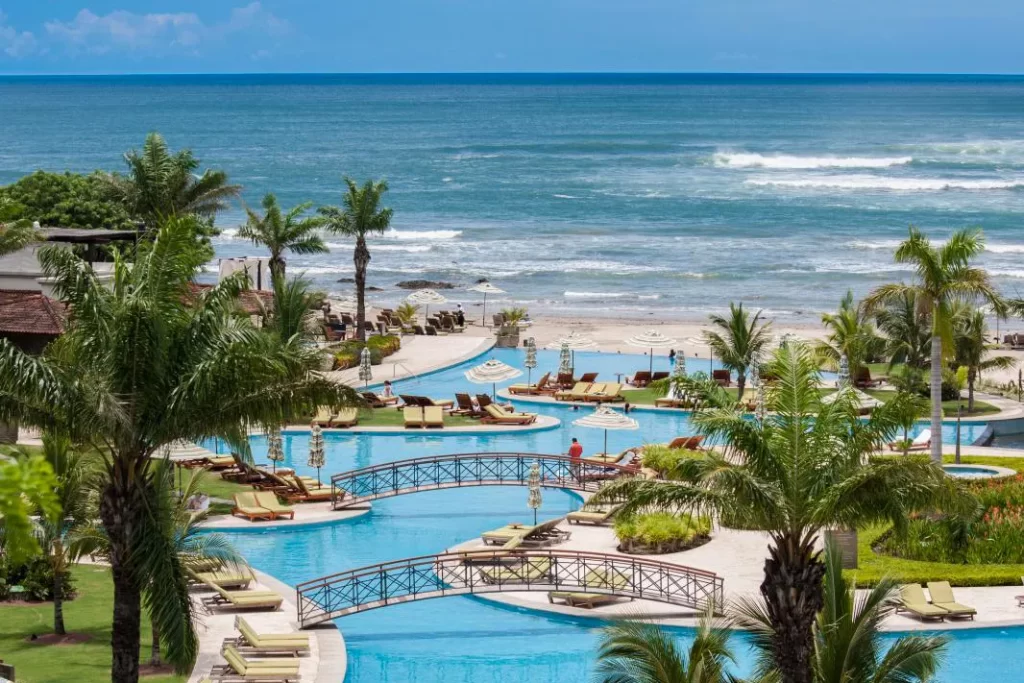
The greatest concentrations of all-inclusives are located in the Guanacaste province, along Costa Rica’s northwestern coast.
Here, the drier climate lends itself to languid days poolside, with numerous golf courses and other amenities. You’ll find all of the recognizable names here, including the Westin, Andaz, Four Seasons, and more.
Where to Go in Costa Rica for Hiking
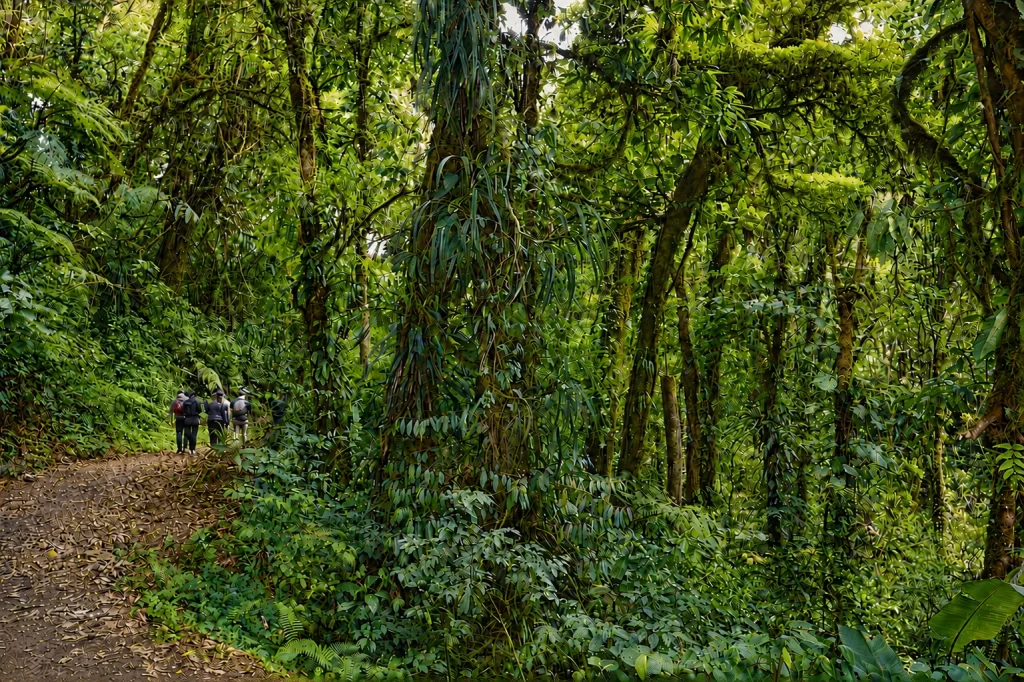
While much of Costa Rica’s popularity arises from its water activities, hiking aficionados will still find gorgeous trails within the country’s lush jungle interior.
The best hiking is found within the national parks, with each reserve offering scenic trails through vibrant local ecosystems.
For beautiful trails that are also easy to get to, the best destinations include Arenal Volcano National Park (we recommend the 3.3-mile Arenal Volcano Trail), Manuel Antonio National Park (5 miles of interconnected trails) or the Monteverde Cloud Forest (8 miles of interconnected trails).
While it’s rare to find strenuous, longer-distance hiking in Costa Rica, truly experienced backpackers may enjoy the challenge of summiting Mount Chirripó, the highest peak in Central America. Located in the remote Chirripó National Park, the 25-mile trek requires permits booked through the Ministry of Environment and Energy website portal.
Where to Go in Costa Rica for Snorkeling
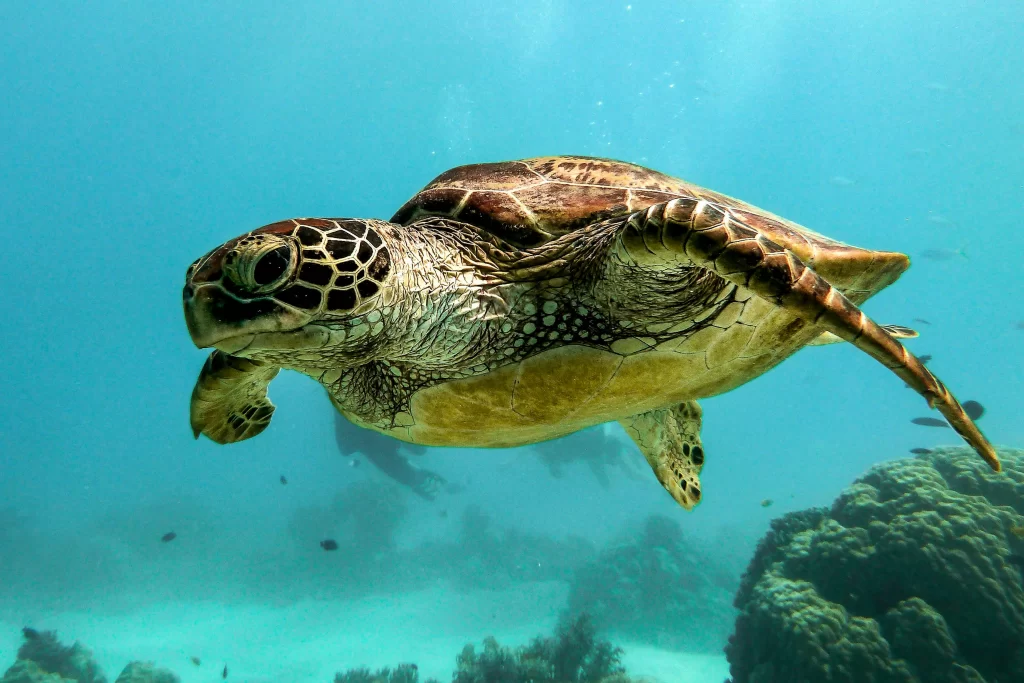
We’ll be honest: Costa Rica is not a snorkeling mecca. If you truly want to plan a trip around vibrant coral reefs, you’re better off heading to Caribbean destinations like Belize.
However, there are still snorkeling spots around the country that promise calm waters, sea turtles, and schools of brightly-colored fish.
The top destination is the southerly Osa Peninsula, with the offshore eco-reserve Isla del Caño widely acknowledged as the best snorkeling in the country. Being a reserve, you’ll need to book a guided tour to visit.
Golfo Dulce is another popular reef, along the Osa Peninsula’s eastern shore.
Additionally, Cahuita National Park on the nation’s Caribbean coast features 35 coral species, along with multitudes of marine life.