
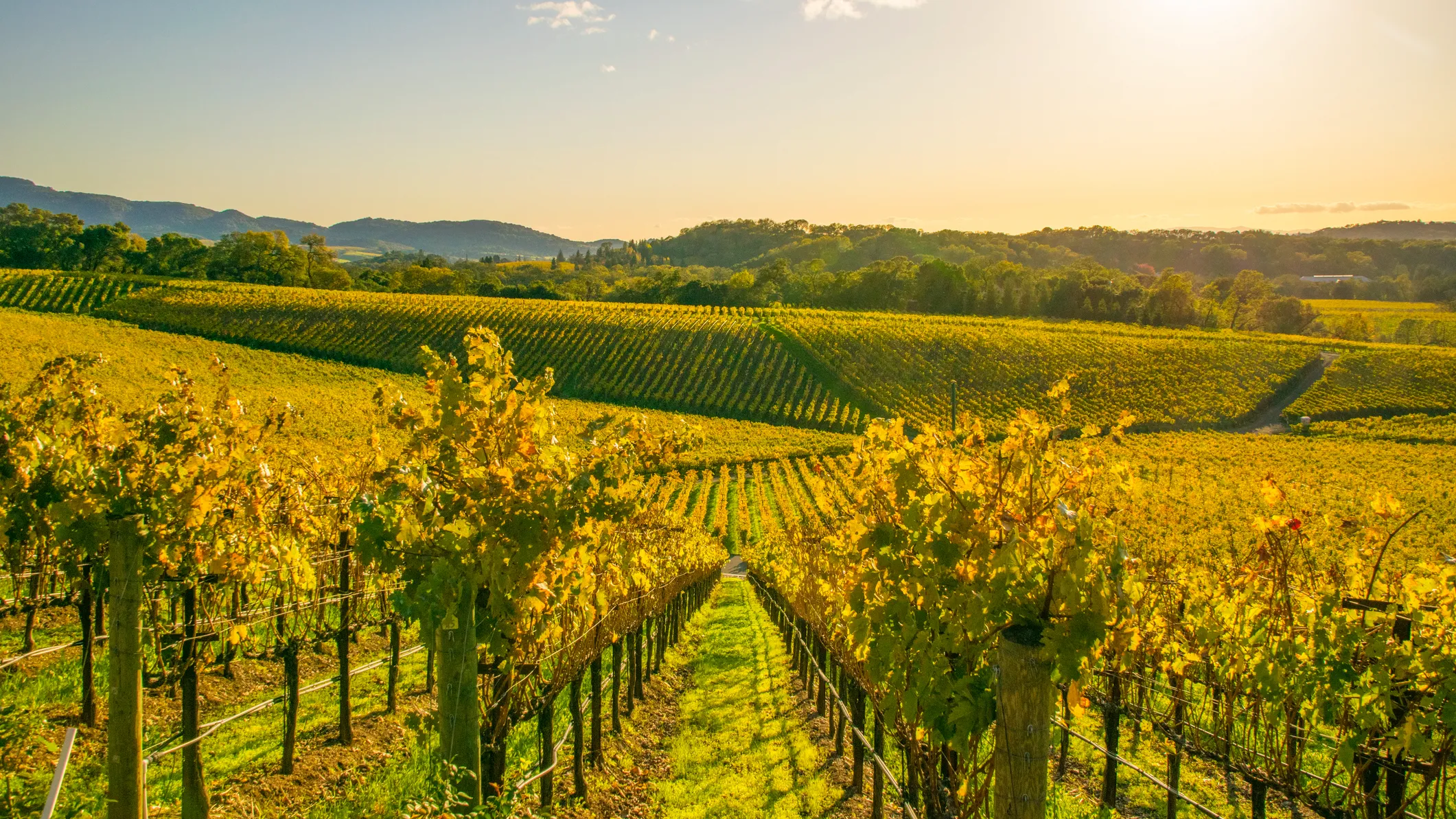
Together, Napa and Sonoma comprise California Wine Country – the state’s original and most renowned wine-growing region.
Although Napa and Sonoma sit just a 40-minute drive apart, each locale has its own unique character. Between the two, you’ll notice a distinct culture, wines, climate, and more.
This guide compares the qualities and quirks of both Napa and Sonoma, to help you choose which of these storied destinations to visit.
Jump to:
Overview: Napa and Sonoma
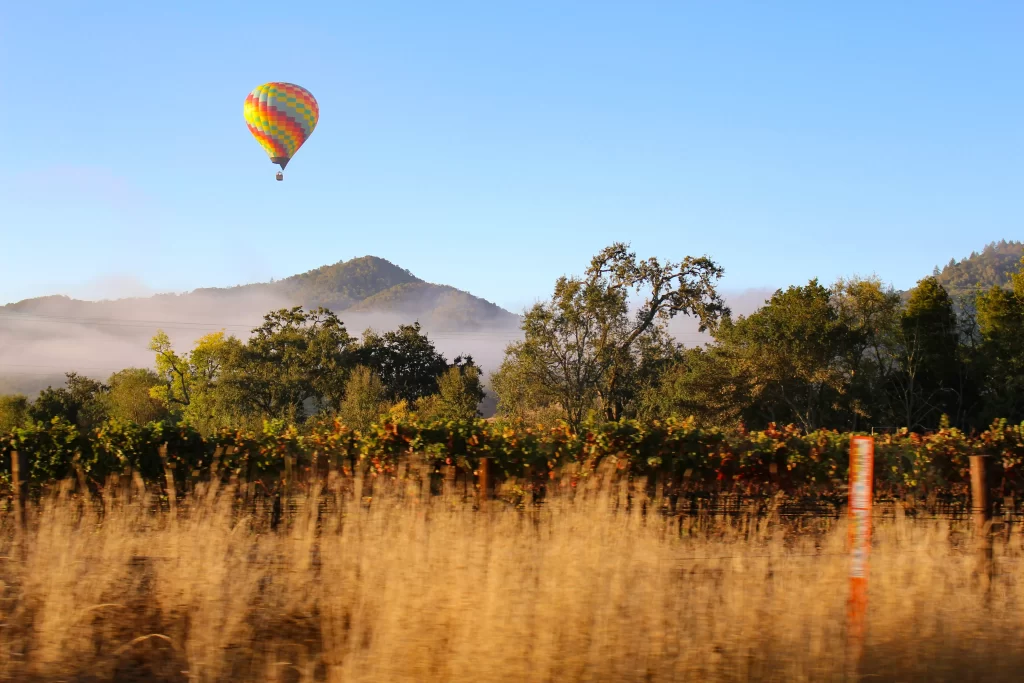
California Wine Country sits just north of San Francisco, and you can reach both Napa and Sonoma within 90 minutes from the Bay Area.
Napa Valley is more compact than Sonoma, with its main towns strung along 20 miles of Highway 29.
Sonoma is twice the size of Napa, with numerous towns and hamlets stretching nearly an hour’s drive in any direction.
Weather

Napa is inland from Sonoma, with a warmer, drier climate, whereas Sonoma County extends all the way to the coast.
Sonoma’s proximity to the Pacific Ocean creates more varied microclimates, with sunny, golden hills (in the south and east) giving way to coastal fog and redwood forests (north and west).
Cost

Historically, wine tastings in Napa were significantly more expensive than Sonoma, although that gap has closed in recent years, as Sonoma has become more “discovered.”
In general, you can still expect to pay more for tastings in Napa Valley, but the difference shouldn’t be enough to sway your decision towards one destination over the other.
Culture and Vibe
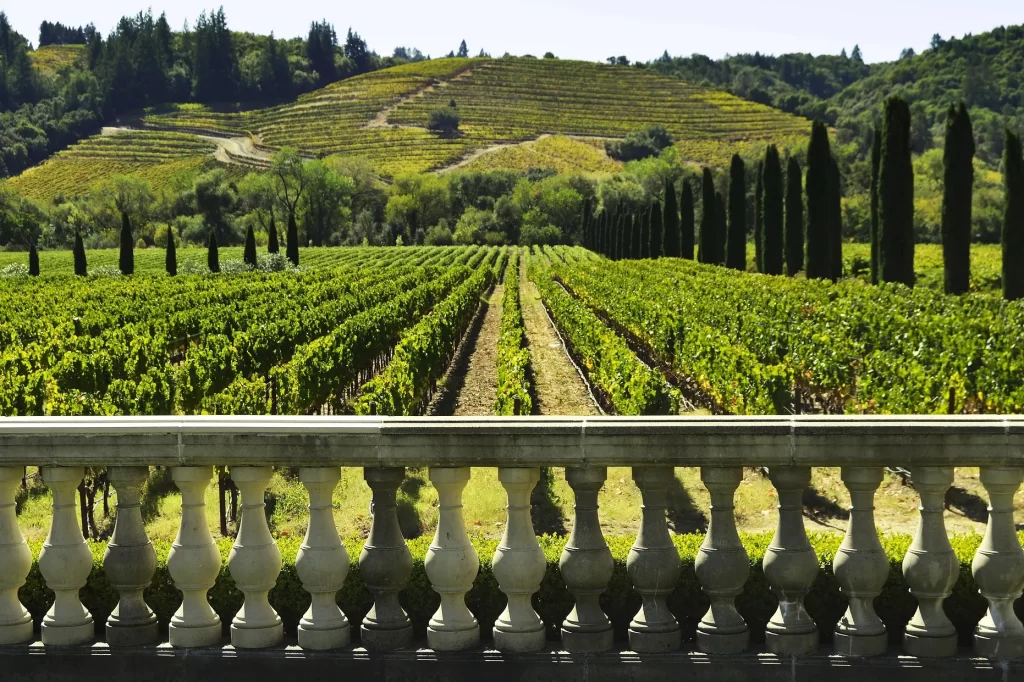
As a broad generalization, Napa has more of a trendy “scene,” whereas Sonoma is more agrarian and relaxed.
In Napa, you’ll inevitably share space with moneyed Bay Area day-trippers and flocks of girls’ trips attracted to the glitzy getaway, with its exclusive dining, spas, and other amenities.
In Sonoma, you’ll still find high-end experiences, especially in the town of Healdsburg, but it’s a more refined and subtle luxury.
To best sum up the difference, look no further than the hip restaurants in each destination: Napa dining is often more overtly swanky, while Sonoma typically leans into the popular farm-to-table trend.
Getting Around Napa and Sonoma
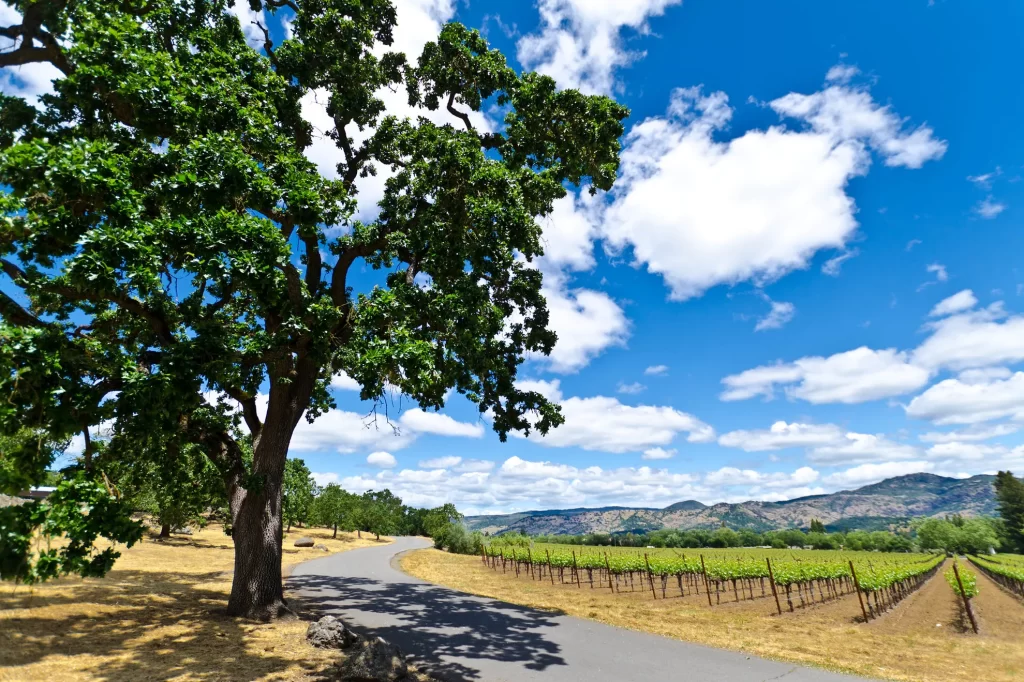
The easiest way to visit both Napa and Sonoma is by car.
In both counties, wineries will be spread out, and having a vehicle gives you the greatest flexibility to get around (it goes without saying to always designate a driver and be smart about wine tastings).
However, public transportation is available to Napa and Sonoma, if you’re willing to stay put in one location.
Napa Public Transit
In Napa, the VINE bus system regularly connects the towns in Napa Valley to the Vallejo ferry terminal, El Cerrito Del Norte BART station, and Suisun City Train Depot. Check the current schedule at the VINE website.
Sonoma Public Transit
For Sonoma, you can catch a bus from multiple locations in the Bay Area, including shuttles from either SFO or OAK airports.
Additionally, from the San Francisco Ferry Building, you can take the Larkspur Ferry to Marin County. Buses will transit you from the ferry landing to the San Rafael Train Station, where you can then ride the SMART train to numerous destinations. (There are so many transit permutations, it’s best summarized at the Sonoma County website.)
Rideshares and Private Operators
Rideshares (including Uber and Lyft) are also available in both Napa and Sonoma, although cell coverage can be spotty if you’re at a winery out in the country.
Lastly, numerous tour operators provide all-inclusive wine tastings and transportation throughout each region, which helps minimize the need for a personal vehicle.
You can explore wine tasting tours at Viator’s website.
Wines
Each region’s wines intricately reflect their climate, and it’s worth considering your own preferences when choosing where to go.
Napa
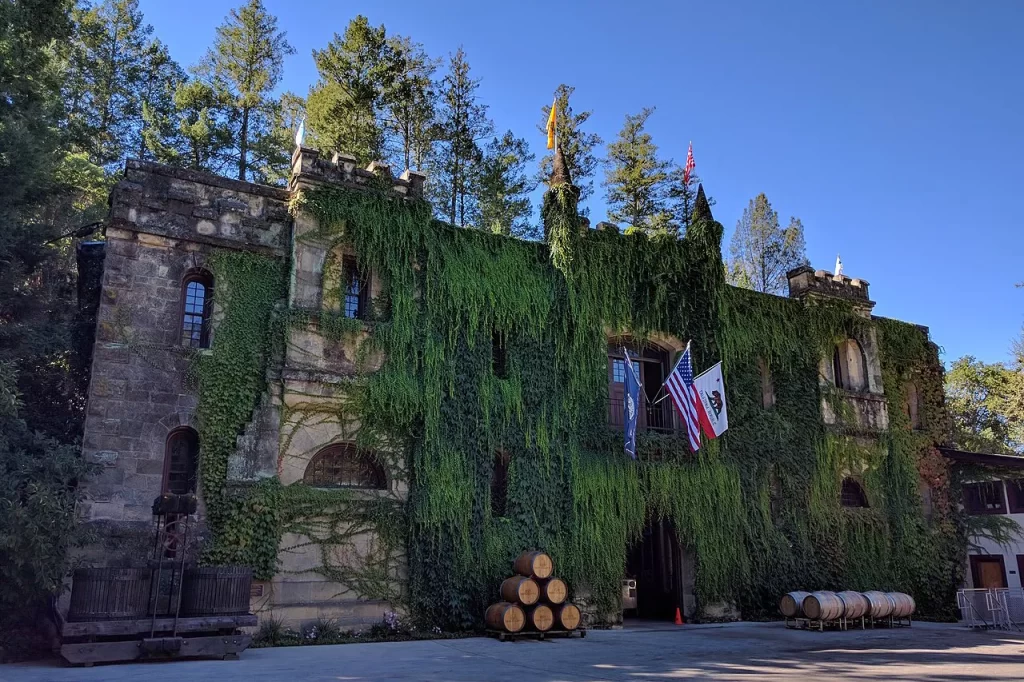
Napa’s hotter, drier climate leads to more robust red wines – most notably cabernet sauvignon, along with merlot and zinfandel. Chardonnay is the most widely-grown white grape in Napa.
If you’re looking for a dose of wine history with your tasting, both Stag’s Leap and Chateau Montalena played a large role in Napa’s rise to fame. They were the red and white wines, respectively, that beat the French vintages in a blind taste test in Paris.
(The “Judgment of Paris,” as the 1976 event came to be known, was immortalized in the 2008 movie “Bottle Shock.”)
Sonoma
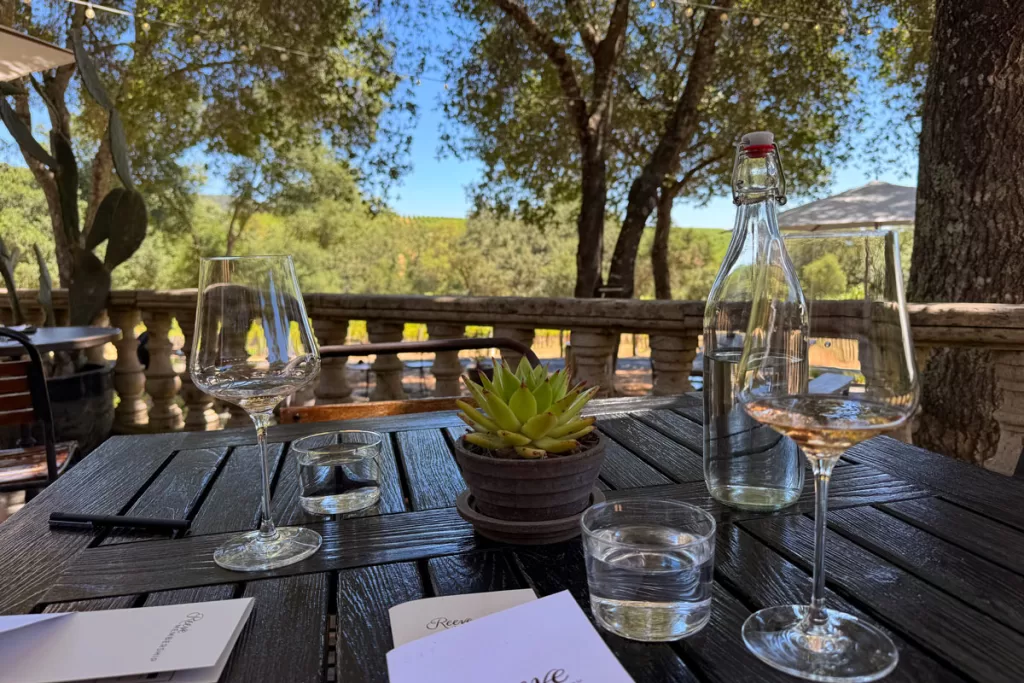
Compared to Napa, the coastal fog and cooler temperatures in Sonoma trend towards smoother, more elegant varietals.
Sonoma is California’s top producer of pinot noir, and the second-highest grower for chardonnay – especially along the fertile Russian River Valley and foggy Sonoma Coast.
We’ve found that some of the most exciting wines right now are being cultivated by smaller winemakers, especially in the organic space.
You can read more at our guide to our favorite natural Sonoma wines.
Towns: Where to Stay in Napa and Sonoma
Napa
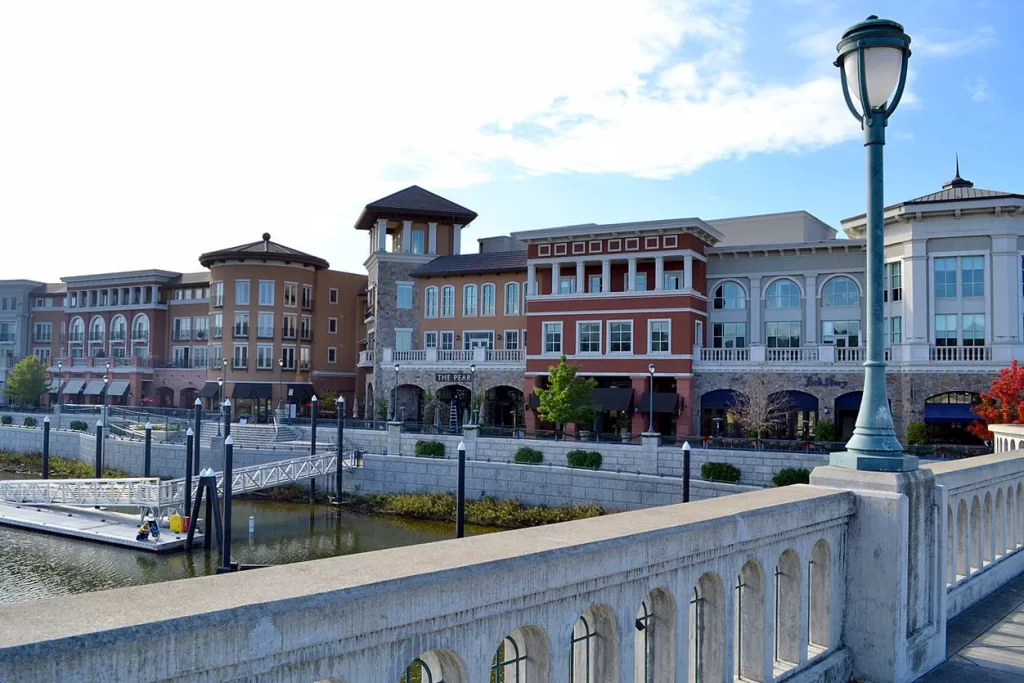
The wine-making center of Napa Valley is much more compact than Sonoma, with a series of quaint towns strung along Highway 29 (the main artery through Napa).
The three most popular destinations include the valley’s namesake Napa, Yountville, and St. Helena:
- Napa: The largest town, and also the seat of Napa County. The downtown is fully walkable, with a riverfront promenade, Oxbow Public Market, and even a vintage wine train that will transport you to area wineries.
- Yountville: Arguably the most upscale hamlet (as evidenced by being home to The French Laundry, the world-famous Michelin three-star restaurant). Yountville is a smaller town, which is often desirable for the more genteel visitors it attracts.
- St. Helena: The town furthest north, St. Helena nicely balances the characteristics of Napa and Yountville. (If Napa is too big, and Yountville is too quiet, Goldilocks would proclaim St. Helena “just right.”). St. Helena has a small main drag, offering a pleasant walkability of local shops, cafes, and tasting rooms, while still feeling quietly removed from the larger hubbub of the region.
Sonoma
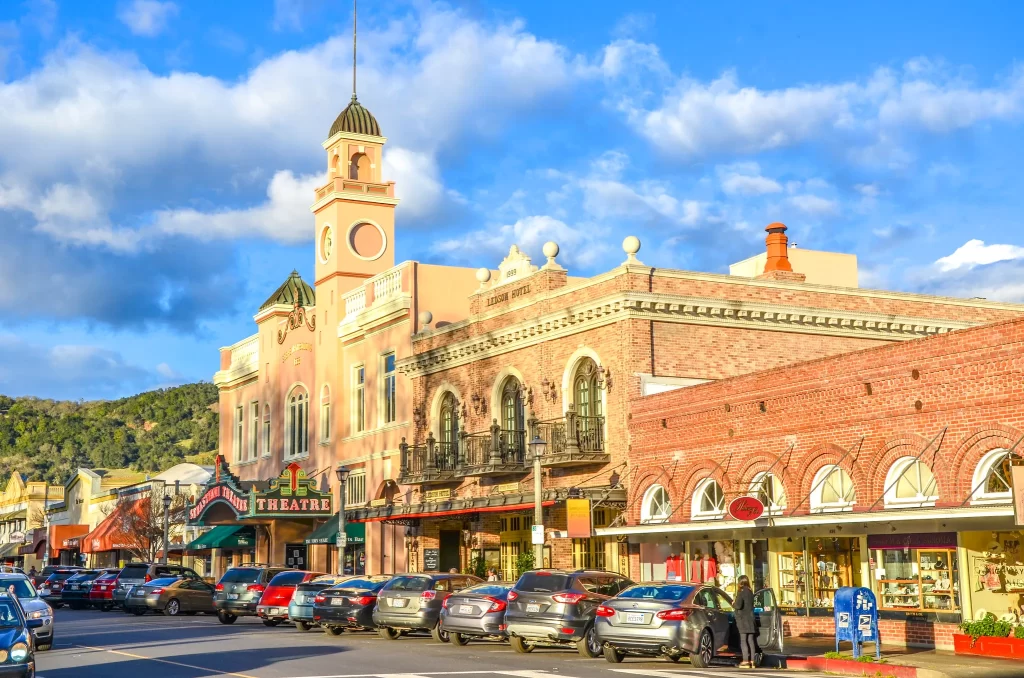
The wine-growing sub-regions of Sonoma County are much more spread out than Napa, stretching nearly an hour’s drive from south to north.
While this may be a drawback to some, it also affords an authentic sense of self, as you wind through the bucolic country backroads connecting Sonoma’s small towns and hamlets.
The county’s two most popular towns among visitors are Sonoma in the south, and Healdsburg in the north:
- Sonoma: The region’s namesake has attracted wine aficionados for ages, long before Healdsburg began coming into its own to rival its southern neighbor. Many of Sonoma’s restaurants and tasting rooms are centered around the old town plaza, which retains an attractive blend of both Spanish and Western architecture. Situate yourself near downtown, and you won’t have to move your car the entire time you’re here. You’re more likely to get warmth and sun in Sonoma, compared to the often cool fog of the redwoods surrounding Healdsburg.
- Healdsburg: The gateway to the esteemed winemaking Russian River Valley, Healdsburg’s popularity has exploded in the last decade or two. It still retains a postcard-perfect small-town charm, even as more Michelin-aspiring fine-dining restaurants move in each year. Today, Healdsburg has firmly entrenched itself as a “foodie” destination beyond just its wine offerings. This type of gentrifying shift always creates angst among locals who remember the “old days,” although the town’s offerings certainly make Healdsburg a delight to visit.
Around Sonoma County, you can also find additional destinations to serve as your home base:
- Santa Rosa: The largest city in Sonoma County, which often affords more reasonably-priced hotel options. Santa Rosa has a small, walkable downtown – even if it’s not as idyllic as the small towns in the surrounding countryside, it still has its own appeal. The famous Russian River Brewery’s flagship location is also here, if you’re looking for a break from the wine.
- Sebastopol: This funky outpost has stayed close to its hippie, counterculture roots. With numerous quality dining options (Handline and Ramen Gaijin are personal favorites) and the trendy Barlow market district, Sebastopol is also in close proximity to many of Sonoma County’s top wineries.
- Guerneville: Another funky little spot, set amongst towering redwood groves along the Russian River. Great for those looking for a moody, atmospheric escape into nature (be sure to go for a hike in gorgeous Armstrong Redwoods State Park!).
- Occidental: Barely more than a one stoplight town, but what it lacks in size it makes up for in charms. Skip down the road to Wild Flour Bakery in neighboring Freestone for fresh breads, scones, and pastries – best enjoyed in their on-site gardens.
Summary: Napa and Sonoma
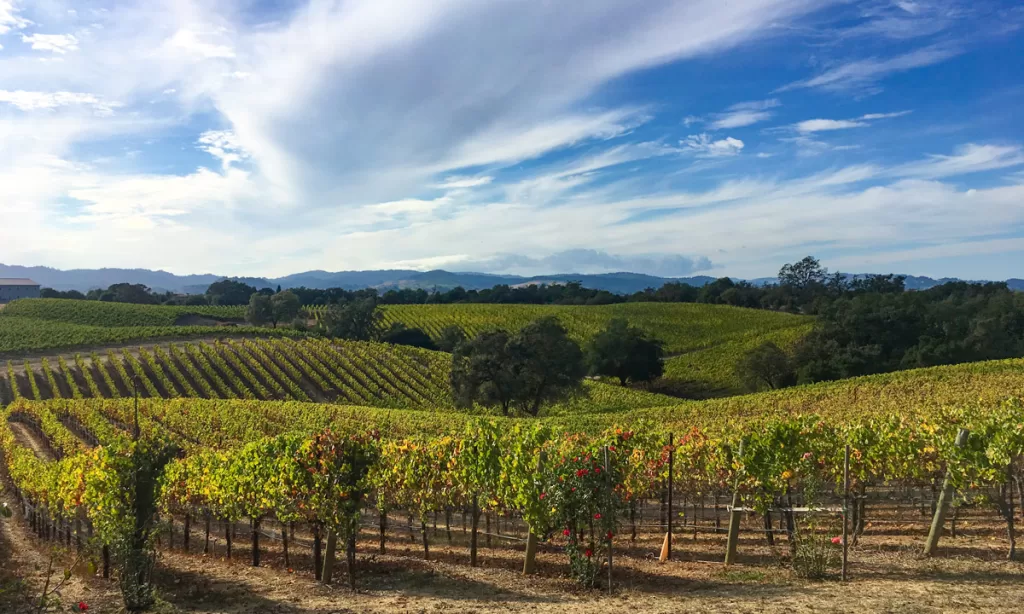
Both Napa and Sonoma are ideal destinations for either a weekend getaway or an extended vacation, and you truly can’t go wrong visiting anywhere in California’s famed Wine Country.
In a broad summary, Napa is better for those wanting a trendy and more glamorous “scene,” while Sonoma is more desirable for those wanting to escape the crowds and find a balance – you’ll still find upscale restaurants and tastings, but set among a more bucolic countryside.
Expect to pay slightly more for wine tastings in Napa. And while we recommend the flexibility of having a car in either destination, Napa is also moderately more accessible via public transit.
This comparison chart lays out the pros and cons of each:
| Napa | Sonoma | |
| Driving Distance from Bay Area | 60-90 minutes | 70-90 minutes |
| Size | More compact | Twice the size of Napa |
| Vibe | Trendy, more of a scene | Refined, more relaxed |
| Top Wine Varietals | Cabernet sauvignon, chardonnay | Pinot noir, chardonnay |
| Tasting Cost | Slightly pricier | Slightly cheaper |
| Climate | Dry, warmer | Varies between dry/warm (south and east) and cool/foggy (north and west) |
| Public Transportation | Slightly more accessible; VINE bus | Requires more logistics; Golden Gate bus or SMART train |
| Most Popular Towns | Napa, Yountville, St. Helena | Sonoma, Healdsburg |
Have more time to spend in California Wine Country? Check out our guides to the best places to paddle board in Sonoma County, where to eat in and around Healdsburg, and more.