
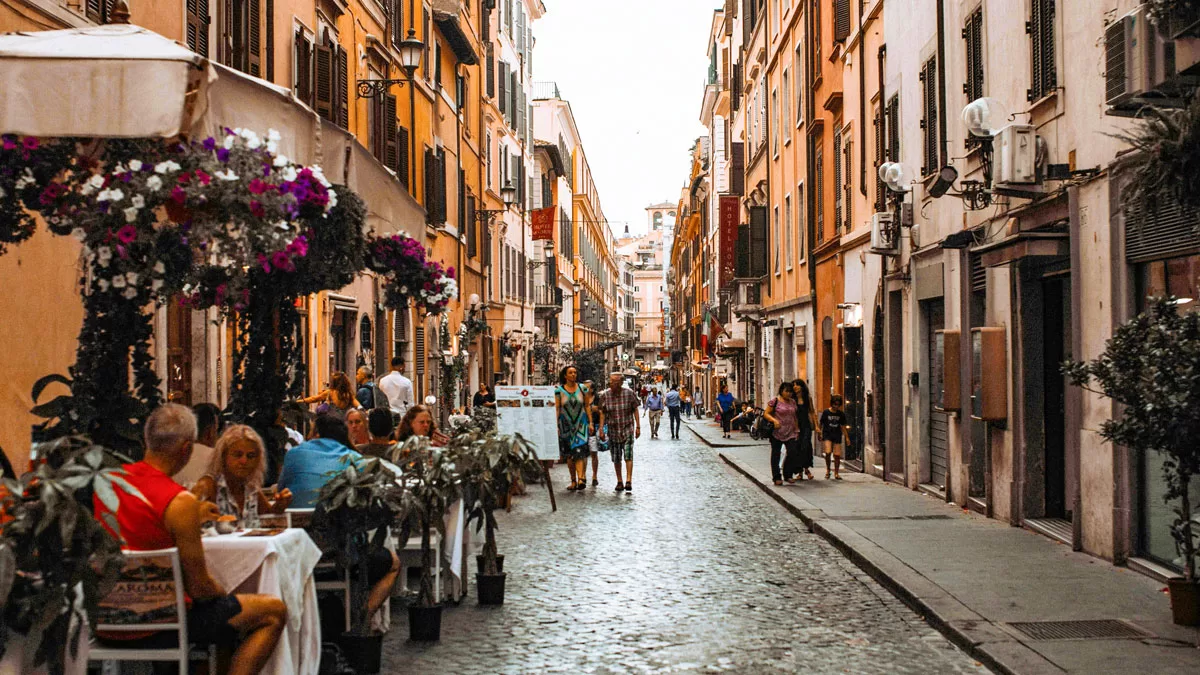
Rome is known for many things, from its history to architecture, but the Eternal City also boasts numerous dishes as uniquely Roman as the Colosseum. Indeed, regional cuisine varies widely across Italy, with each province retaining its own unique flavors, and Rome is no different. This guide highlights what to eat in Rome, including 10 must-try dishes and where to find them.
Jump to:
- Pasta alla Carbonara
- Cacio e Pepe
- Pasta alla Amatriciana
- Pasta alla Gricia
- Pizza Romana
- Carciofi (Artichokes)
- Polpette alla Romana (Meatballs)
- Supplì al Telefono (Rice Balls)
- Trippa alla Romana
- Maritozzi
Pasta alla Carbonara
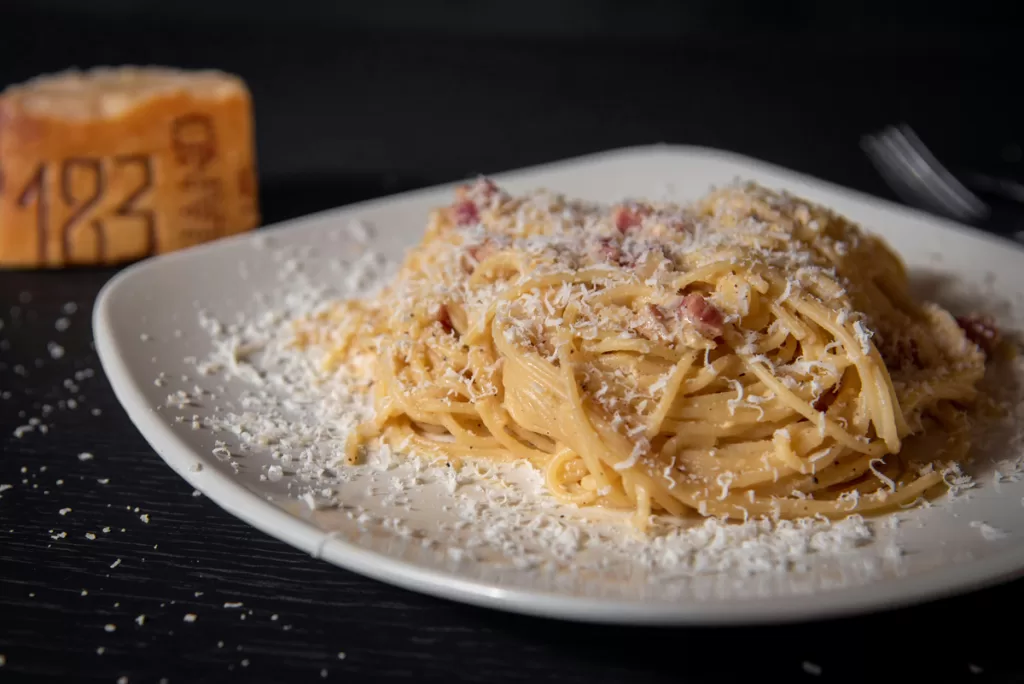
There are four iconic pasta dishes of Rome, with Carbonara being perhaps the most recognizable worldwide.
Interestingly, no one knows exactly where Carbonara originated. However, the prevailing theory is that it came from American G.I. ration packs after WWII, with powdered eggs, bacon, and cheese added to pasta.
In the ensuing decades, that original creativity has led to an iconic local staple. Fatty guanciale is fried to crisp perfection, and mixed with rich egg yolk and a healthy dose of pecorino cheese and pepper. The result is a creamy, richly satisfying dish.
Where to Eat Carbonara
We love the authenticity of Roscioli Salumeria, an all-in-one old-school deli, restaurant, and wine shop. Their take on carbonara is extra creamy – exactly what you want, in a hearty comfort food dish. Directions.
Cacio e Pepe
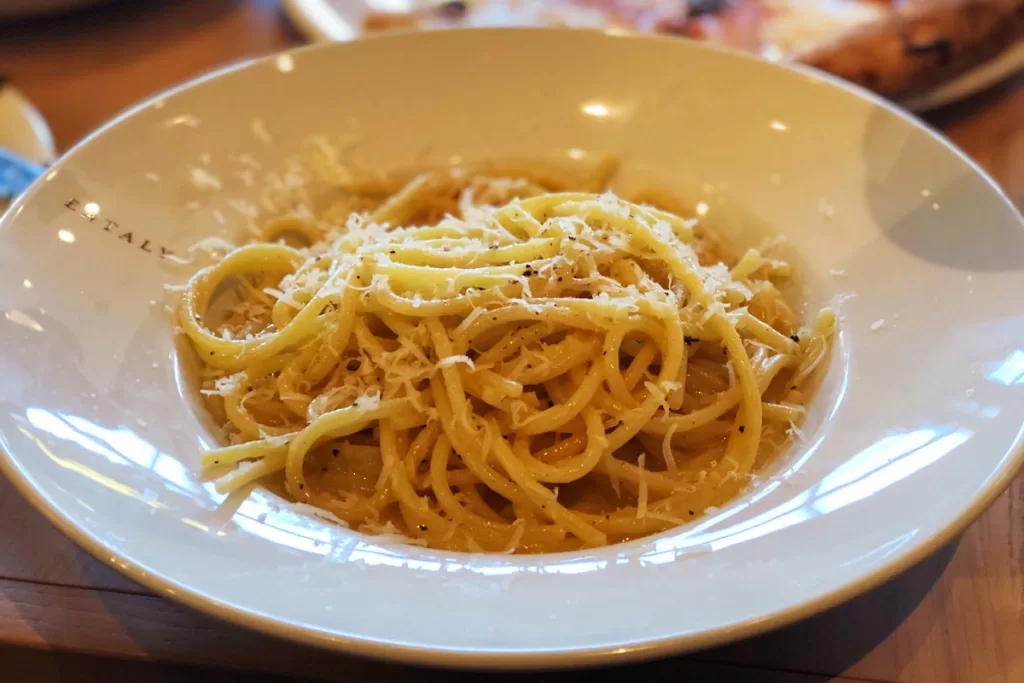
Cacio e pepe is Carbonara’s lighter cousin. The name derives from an old dialect for “cheese and pepper,” which is exactly what this dish is. It’s also one of Lazio’s oldest pasta dishes, having fueled the region’s shepherds for centuries.
The cheese’s rich cream balances against the pepper’s bite, creating a combination that’s perfection in its simplicity. Cacio e pepe typically comes with long, thin noodles like tonnarelli, spaghetti, or bucatini. But today, you may also find more creative variations with rigatoni or other noodle shapes.
Where to Eat Cacio e Pepe
A friend who lived in Rome for many years tipped us off to Matricianella, a local favorite just a few blocks from the Tiber river. Every one of their pasta dishes is exceptional, but we returned twice in 48 hours for their cacio e pepe. Directions.
Pasta all’Amatriciana
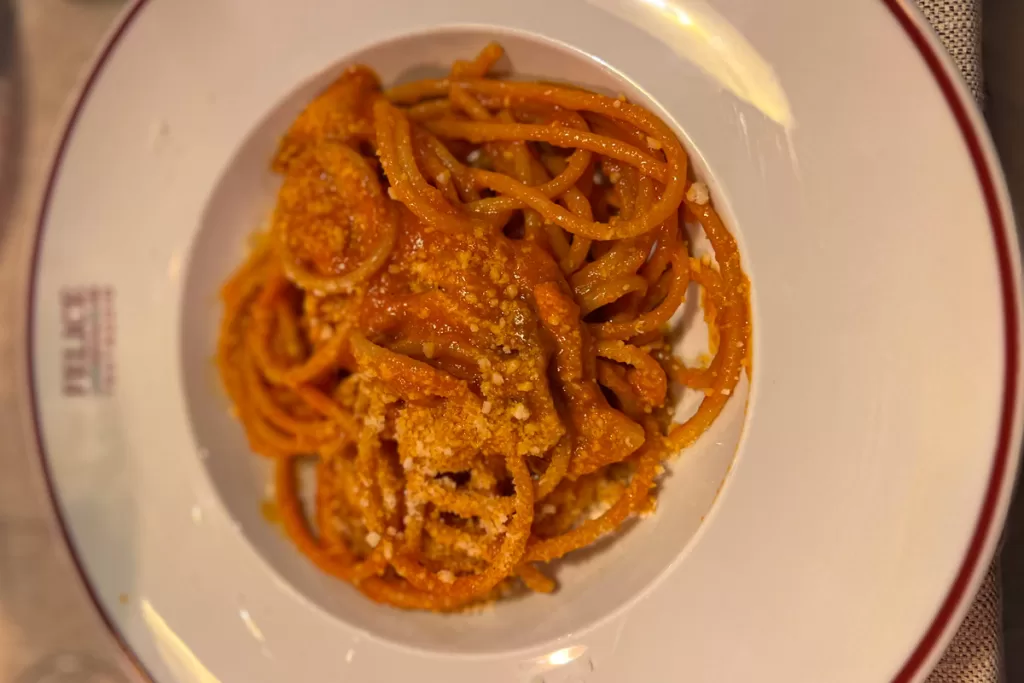
Another dish highlighting the simplest of ingredients, Amatriciana leans heavily into the region’s abundance of tomatoes. Here, tomatoes are slow-cooked in a rich sauce, before stirring in crisp guanciale, pecorino cheese, and frequently a dash of chili flakes to finish.
Traditionally, Amatriciana is served with bucatini noodles.
Where to Eat Amatriciana
Escape the tourist hubs to the Testaccio neighborhood. Here you’ll find Felice, a venerable favorite that serves up first-rate Roman specialties. You can’t go wrong with any dish here, but we found their Amatriciana to be one of the best. Directions.
Pasta alla Gricia
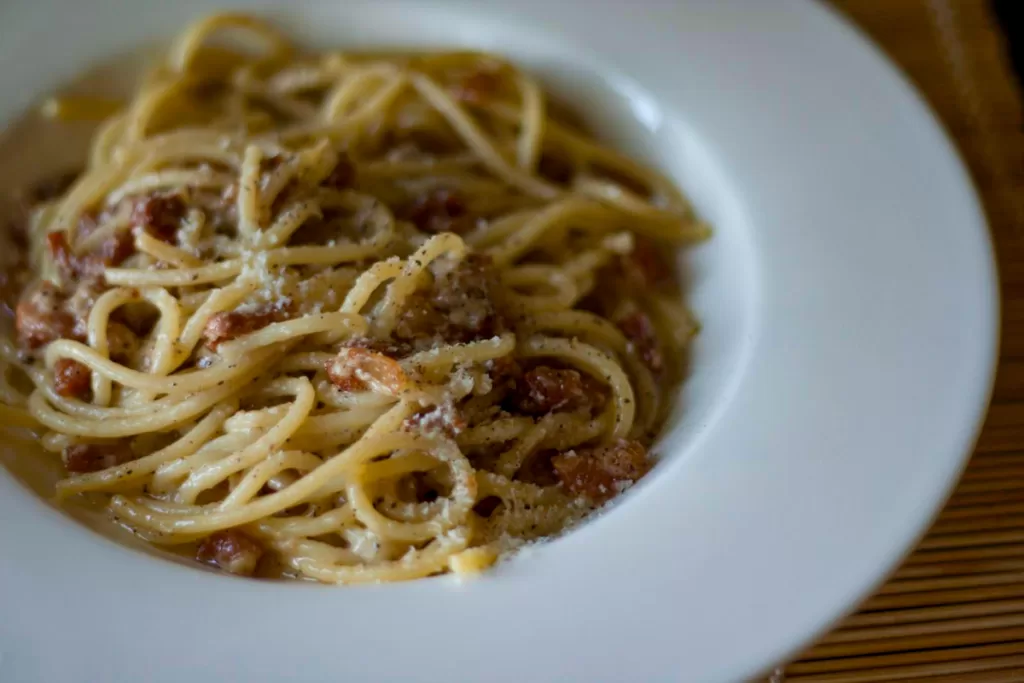
This is our personal favorite of Rome’s four pastas (it’s also the least known outside of the region).
Gricia is an elevated take on cacio e pepe. It’s has all the same trappings of the original dish, but with the addition of crispy fried guanciale for an extra bite (and richness). The combination is absolute heaven.
Where to Eat alla Gricia
Located on a quiet residential street west of the Tiber, Da Cesare al Casaletto is worth the trek. It’s frequently cited among the perennial travel magazines as one of the best restaurants in the city, and their Gricia is one of our favorites. Directions.
However, note that their pastas all lean to the richer side. If you prefer your Gricia lighter, then Felice al Testaccio comes a close second.
Pizza Romana
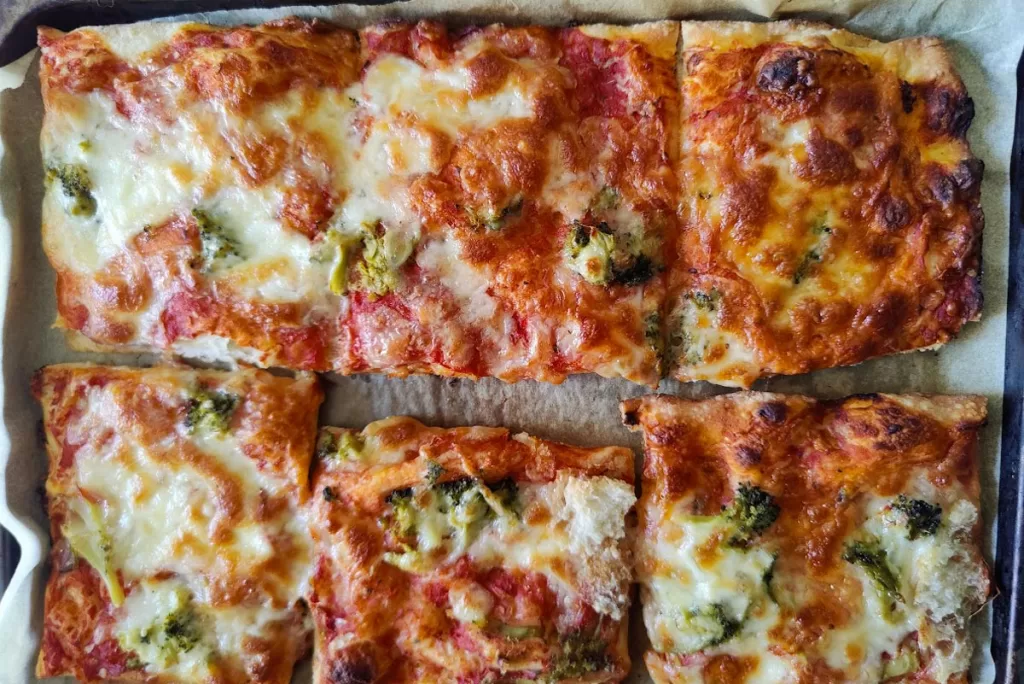
Roman-style pizza is different from the pizzas you usually find worldwide, which instead emulate the Neapolitan style. In Rome, you’ll find two classic variations.
Pizza al Taglio, or “cut” pizza, has a thicker crust (similar to a focaccia bread) and is cut into square slices, usually with scissors. You’ll typically find al Taglio as a lunchtime takeaway dish, often served via a casual streetside window.
Round pizzas (pizza tonda) are also common in Rome, usually found in sit-down restaurants. However, the Roman style has a much thinner crust, with an olive oil finish to crisp the dough in the oven.
Where to Find Pizza Romana
For an authentic al Taglio experience, head to Trastevere’s Supplì Roma. This no-frills takeaway joint doesn’t even have seating, but part of the experience is mingling with locals streetside as you enjoy your pizza by the slice. They also do quality supplì – more on the Roman rice balls below. Directions.
Conversely, if it’s round pizza tonda you seek, you’ll find a first-rate version at L’Elementare. Their Roman-style crust is crisp perfection, and you can choose from a variety of toppings. L’Elementare has four locations throughout Rome.
Carciofi (Artichokes)
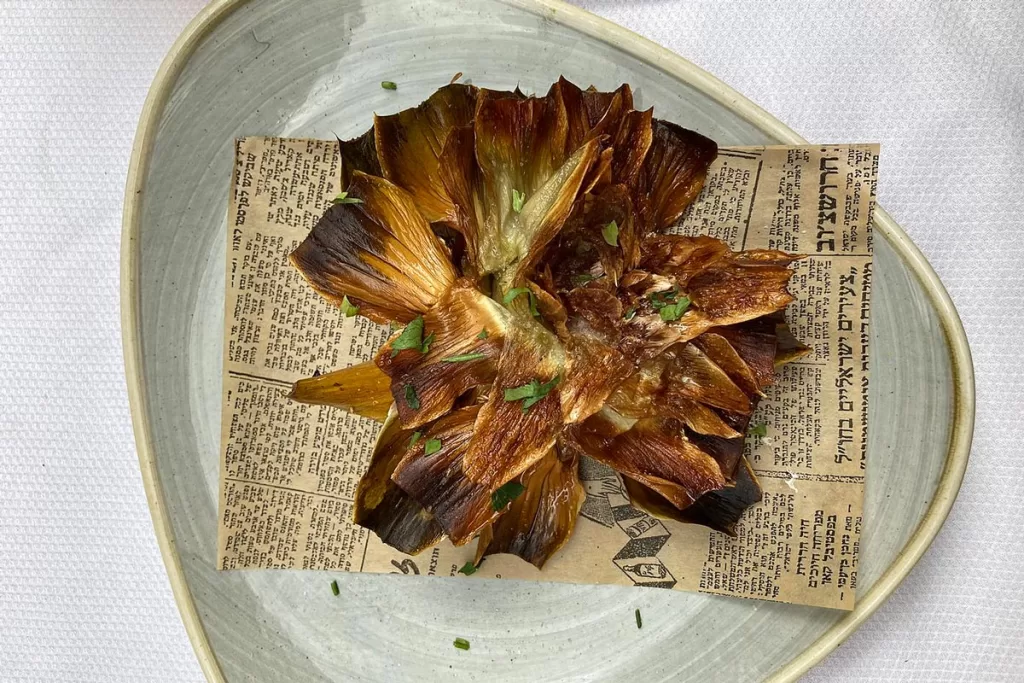
This Mediterranean vegetable is a staple on Roman tables, and is arguably the appetizer to accompany your main dishes, when deciding what to eat in Rome. Artichoke season peaks in spring, although you can usually still find them on the menu year-round if you’re visiting off-season (even if it’s not the prized Romanesco varietal, which only appears in spring).
There are two variations to preparing Roman artichokes.
The first, carciofi alla Romana, has artichokes stuffed with flavorful herbs and steamed in a mixture of olive oil, white wine, and water. The result is a light, flavorful delicacy that is consumed by peeling off each individual leaf.
The second version of artichoke preparation is alla giudea, or Jewish-style – an homage to their origination in Rome’s Jewish ghetto. Here, artichokes are deep-fried whole – an indulgent treat that hits the spot and is one of our personal favorite dishes.
Where to Find Artichokes (Carciofi)
Forgive our repetition, but Matricianella (already highlighted above for their cacio e pepe) does some of the best artichokes we’ve found in Rome. Especially their Jewish-style – it’s crispy, crunchy, deep-fried goodness that’s sure to satisfy. Directions.
Polpette alla Romana
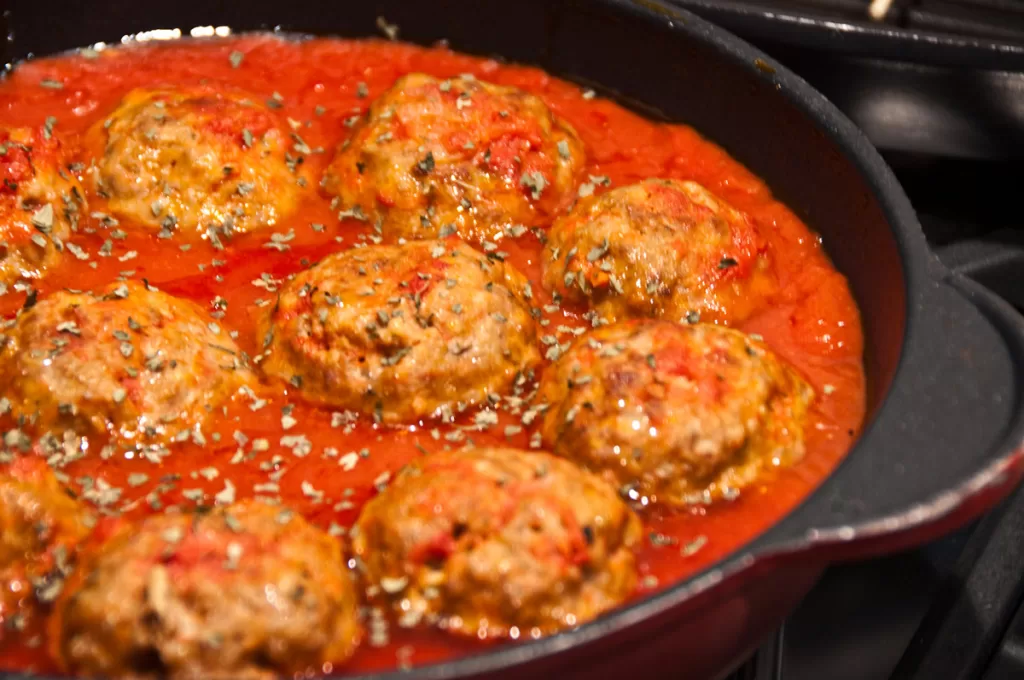
Yes, meatballs are ubiquitous in cuisine throughout Italy. But what makes these Roman-style meatballs so special is the cooking style.
In Rome, the meat is combined with bread crumbs, cheese, garlic, and herbs, and cooked directly in their serving sauce. As a result, the meatballs have fully soaked up all the juices and flavors of the tomato sauce, leaving a light, melt-in-your-mouth treat.
Polpette alla Romana can be enjoyed either as an appetizer or a main course.
Where to Eat Polpette alla Romana
The richness that’s prioritized on their rest of their menu extends to Da Cesare al Casaletto’s polpette, which are melt-in-your-mouth good. Directions.
But if you want to try somewhere new, the iconic da Enzo al 29 in Trastevere is famous for its traditional take on Roman meatballs. Directions.
Supplì al Telefono
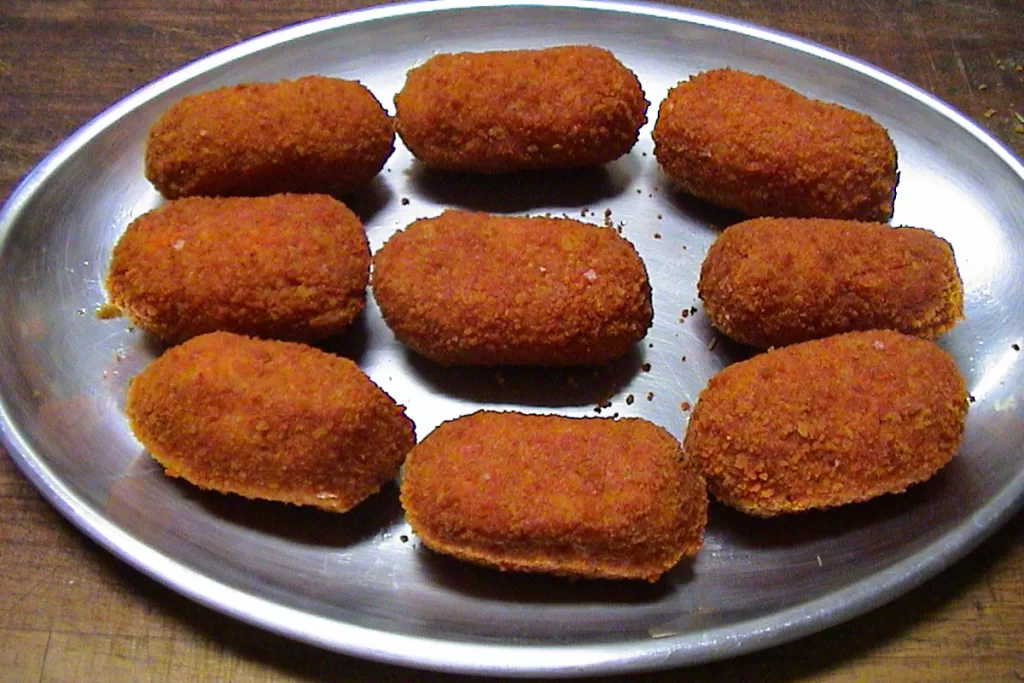
Any fan of arancini will swoon over these savory Roman-style rice balls. The simplistic combination of arborio rice, ground meat, and mozzarella make for a satisfying street food snack that hit the spot at any time of day.
Fun fact: Supplì al Telefono literally means “telephone cord,” which is what the stretched-out mozzarella resembles when you take a hefty, steaming bite.
Where to Eat Supplì al Telefono
Supplizio, in the heart of Rome, is famous for its gourmet take on the street food staple. Don’t worry though, they’re still street food prices. Choose between the classic or those stuffed with variations of Roman pasta (including carbonara, cacio e pepe, and amatriciana), all for just €3 each. Directions.
Trippa alla Romana
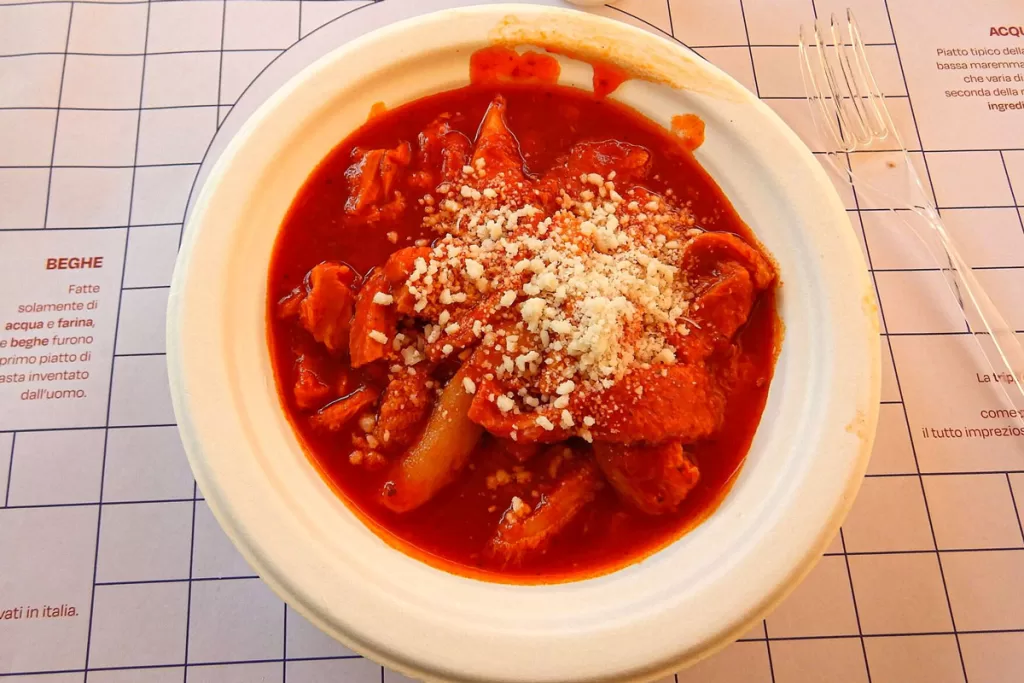
It takes a more adventurous eater to overcome the mental hurdle many Westerners have towards tripe. But while offal is often looked down upon elsewhere, in Rome it’s a savory delicacy.
Trippa alla Romana owes its richness to long simmering in a flavorful tomato and mint sauce, before topped with a healthy dose of pecorino cheese.
Where to Eat Trippa alla Romana
Testaccio’s historic (and legendary) Checchino dal 1887 has been serving up authentic Roman cuisine since, well, 1887. The amount of offal on the menu signals how authentic it is, but the tripe particularly stands out.
The dish is prepared in the traditional way, with hearty pecorino and mint blended into flavorful tomato sauce. Directions.
Maritozzi
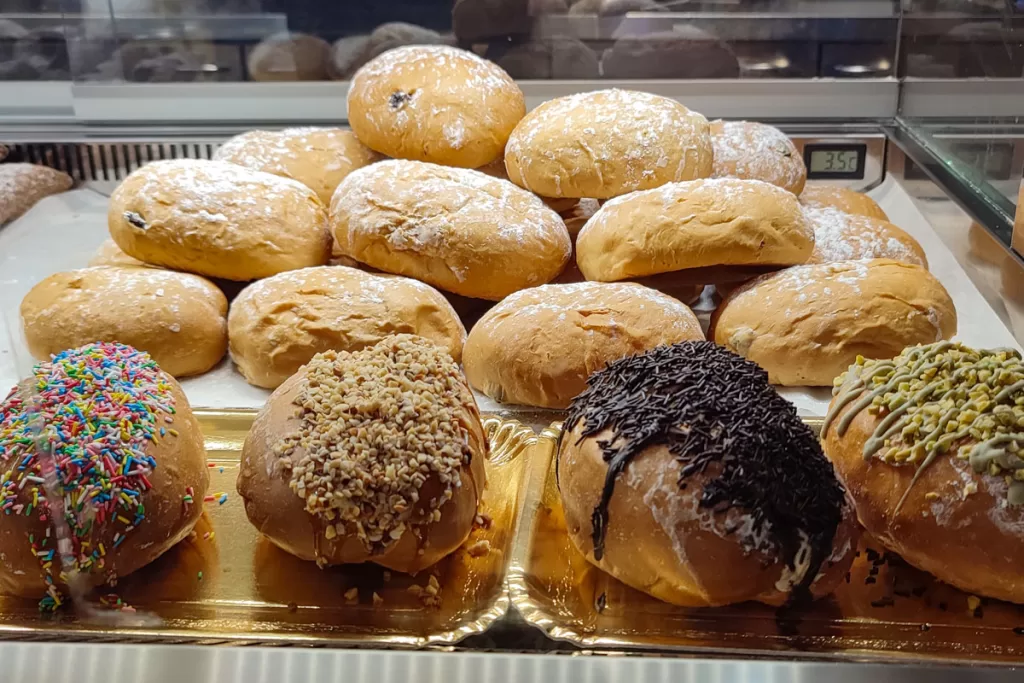
This uniquely local dessert dates as far back as Ancient Rome, and even has its own designated calendar day (Maritozzo Day is the first Saturday of every December).
Reminiscent of Sicily’s cannoli, maritozzi are made of oversized sweet buns, stuffed with sweet cream and other fixings.
Where to Eat Maritozzi
While there are plenty of sleek bakeries dishing out trendy takes on the classic dessert, when it comes to sampling the regional fare, we always lean towards tradition.
For maritozzi, we head to Regoli Pasticceria, a family-owned pastry shop that has been baking the buns in the time-honored way for over a century. Directions.